A traveller's life for me: Breaking barriers for Kent's GRT communities

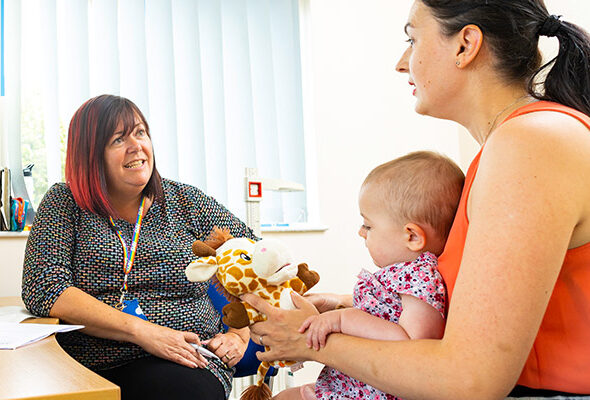
It was Bonnie Lou’s first visit from a health visitor after giving birth to her daughter, Navy, in April 2023. Recovering from a caesarean and with her five-year-old son Billy running around the plot of land she shares with her extended family, she was anxious and dreading the visit.
Bonnie, 28, who is part of Dartford’s gypsy community, has always felt nervous about medical appointments because of prejudice she has experienced in the past.
“I was worried someone would judge me,” she recalled. "Many say we’re dishonest or dirty, but my family lead a good life.
“When you live in this community, you get used to being treated like an outsider."
When Health Visitor Emma Lee arrived, everything changed. Bonnie felt an instant connection, not least because they both grew up in the same environment – Emma herself being a member of the Gypsy, Roma, Travelling (GRT) community.
They shared stories of their childhoods and their families. Emma was professional, practical, but also deeply understanding of the anxieties of a new parent from a tight knit, often misunderstood community.
“Emma made me feel normal,” Bonnie said. “That’s rare for people like us.”
From then on, Bonnie looked forward to every visit and felt able to text Emma whenever she had concerns about her children.
“Navy has had croup many times as a toddler. I was Googling things and convinced her throat wasn’t developing properly. Emma was so good, explaining everything,” Bonnie added. “She was always at the end of a text message.”

Reflecting on her work with Bonnie, Emma said: “Bonnie reminded me of the way I felt when I first had my baby. You don’t feel pleased someone is coming to help you, you feel worried about what they might think or if you’ll be able to express what you want and need, because we live a life outside of mainstream society.”
Emma’s own journey to becoming a health visitor has itself been remarkable. She became a mother at 17, left school without qualifications and followed the path expected of her as a gypsy, caring for her children and staying close to her family. But she wanted more.
“When I had one of my children, I suffered with terrible postnatal anxiety. Mental health isn’t spoken about in our community, it’s seen as not a real issue. I had a health visitor, Tina, who referred me to places where I could get help. Her care really inspired me.
"I thought, ‘I could be a health visitor.’ I made it my mission. I took an access course at college, then went to university to study nursing.”
During her training placements, Emma kept her background a secret: “I didn’t want a single colleague to know,” she explained. “The prejudice out there is real. I heard words like ‘pikey’ and other racist slurs. It was terrifying to think about revealing who I was.”

Once qualified as a nurse, Emma joined KCHFT’s Health Visiting Team through a specialist community public health nurse postgraduate diploma. With a manager who welcomed her fully, she found the freedom to champion her community.
“I said, ‘this is what I want to do’ and it’s all been about improving access for our gypsy and traveller community. I really feel we can make changes if we put the work in,” she explained.
Nationally, GRT communities have some of the poorest health outcomes of any ethnic group in the UK. Life expectancy is significantly lower than the general population, children are more likely to be born with low birth weight and rates of long-term illness and mental health problems are disproportionately high.
“Gypsies feel judged and not accepted, so they don’t seek help when their health declines. If they trust us, we can intervene early,” Emma explained.
Her work goes beyond individual visits. Emma and her team have organised community initiatives, such as mobile health services, so families who can’t easily travel or feel excluded from mainstream services, can access care. Emma regularly shows up with the public health bus for baby weighing sessions outside schools with high numbers of children from GRT communities.

Bonnie was one of the mums to use this service: “I saw the bus parked at Billy’s school recently and it was so lovely to see it was Emma there, weighing babies, so I got Navy weighed. It was brilliant.”
Emma’s support has helped many members of the community, not just Bonnie Lou. She recalls another mum with a premature baby who was determined to breastfeed, a rarity in her community.
“Because breastfeeding isn’t always spoken about in our community, she came to me because there was no one else she could share that with,” Emma explained. “We worked on a feeding plan, I reassured her and she came to the clinic weekly to get her baby weighed. By six months, she was exclusively breastfeeding and her baby was thriving. That was such a great moment. These are the changes you can make when families feel supported early on.”
Bonnie says the community is ‘proud’ of everything Emma has achieved and believes she is an inspiration to others. She said: “I think we should encourage more travellers to go and learn and get roles in the NHS to support communities the way Emma does. It would make such a difference.”
We want everyone to have the same chance to lead a healthy life, no matter who they are or where they live. Read how we’re improving health inequality in Kent: www.kentcht.nhs.uk/healthinequalities